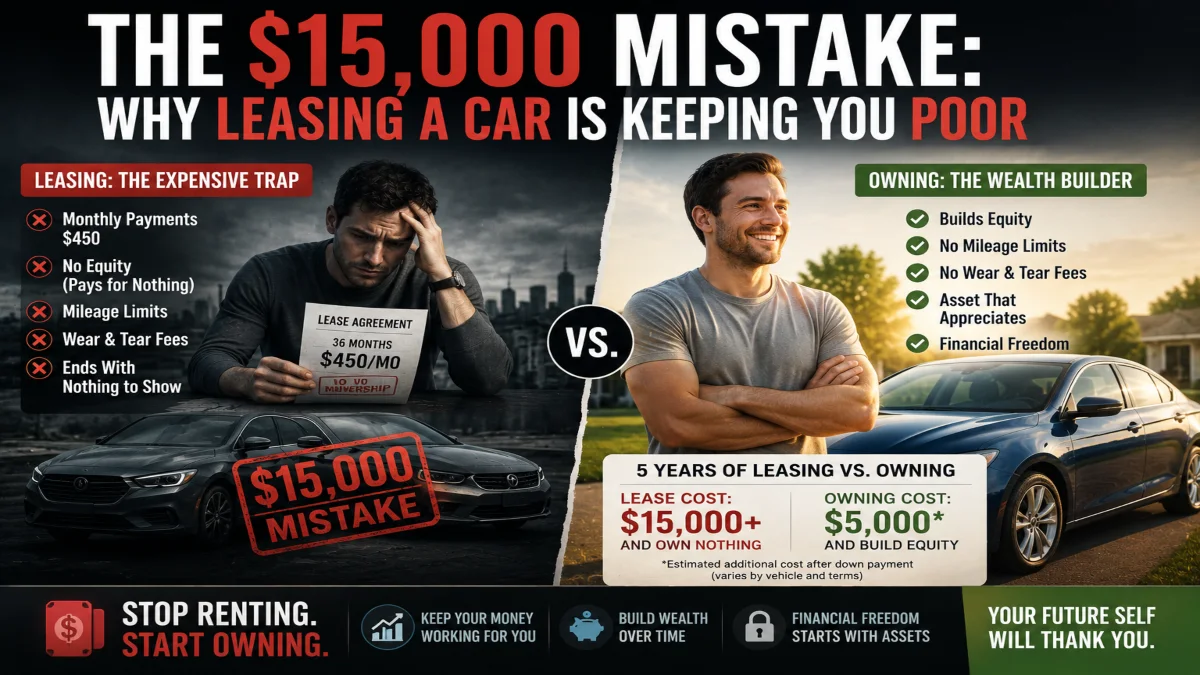
The $15,000 Mistake: Why Leasing a Car Is Keeping You Poor is becoming a growing financial conversation among Americans struggling with rising living costs in 2026. While leasing a vehicle may appear affordable because of lower monthly payments, many drivers are realizing the long-term financial impact can quietly drain savings and delay wealth building. For households already managing debt, inflation, and expensive insurance premiums, leasing is increasingly being viewed as a costly financial trap.
Lower Monthly Payments Hide Long-Term Costs
One of the biggest reasons Americans choose car leases is the lower monthly payment compared to financing. However, many drivers overlook the fact that lease payments build no ownership value. After years of payments, the car still belongs to the leasing company. This cycle often forces consumers into another lease agreement, creating endless recurring expenses.
Fees and Restrictions Add Financial Pressure
Leasing contracts often include hidden costs that increase total spending over time. Mileage penalties, maintenance requirements, wear-and-tear charges, and early termination fees can become expensive surprises. These additional costs make leasing far less affordable than many buyers initially expect.
- Mileage overage penalties
- Expensive end-of-lease charges
- Higher insurance requirements
These extra expenses can quietly damage monthly budgets.
Car Ownership Builds Long-Term Financial Stability
Americans who purchase reliable used vehicles or finance affordable cars often gain long-term financial advantages. Once a vehicle is fully paid off, monthly transportation costs drop significantly. Ownership also provides the option to keep driving without ongoing payments. This financial freedom allows households to redirect money toward savings, investing, or debt reduction.
Rising Vehicle Prices Are Changing Consumer Decisions
Vehicle prices and interest rates remain elevated in 2026, making transportation one of the biggest household expenses. Many Americans are now reconsidering luxury leases and focusing on lower-cost transportation strategies. Used cars, hybrid models, and long-term ownership are becoming more attractive. Financial awareness around transportation spending is steadily increasing.
Younger Americans Are Rejecting Endless Payments
Gen Z and millennials are becoming more cautious about taking on recurring financial commitments. Social media and personal finance creators have highlighted how long-term leasing cycles can delay wealth accumulation. Many younger consumers are prioritizing financial flexibility over premium vehicle upgrades. This shift reflects changing attitudes toward money management and debt.
Leasing vs Ownership Financial Comparison
| Vehicle Option | Average Monthly Cost | Ownership Value | Long-Term Financial Impact |
|---|---|---|---|
| Luxury Lease | $500–$900 | None | High Cost |
| Standard Lease | $300–$600 | None | Moderate Loss |
| Used Car Financing | $250–$450 | Builds Equity | Better Value |
| Fully Owned Used Car | Maintenance Only | Full Ownership | Strong Savings |
| Budget Hybrid Ownership | Low Fuel Costs | Builds Equity | Long-Term Benefit |
Americans Are Rethinking Transportation Spending
The $15,000 Mistake: Why Leasing a Car Is Keeping You Poor reflects a broader shift in how Americans view financial stability in 2026. More consumers are recognizing that endless car payments can limit savings and create unnecessary financial pressure. As living costs continue rising, practical vehicle ownership and smarter transportation decisions are becoming key strategies for building long-term financial security.