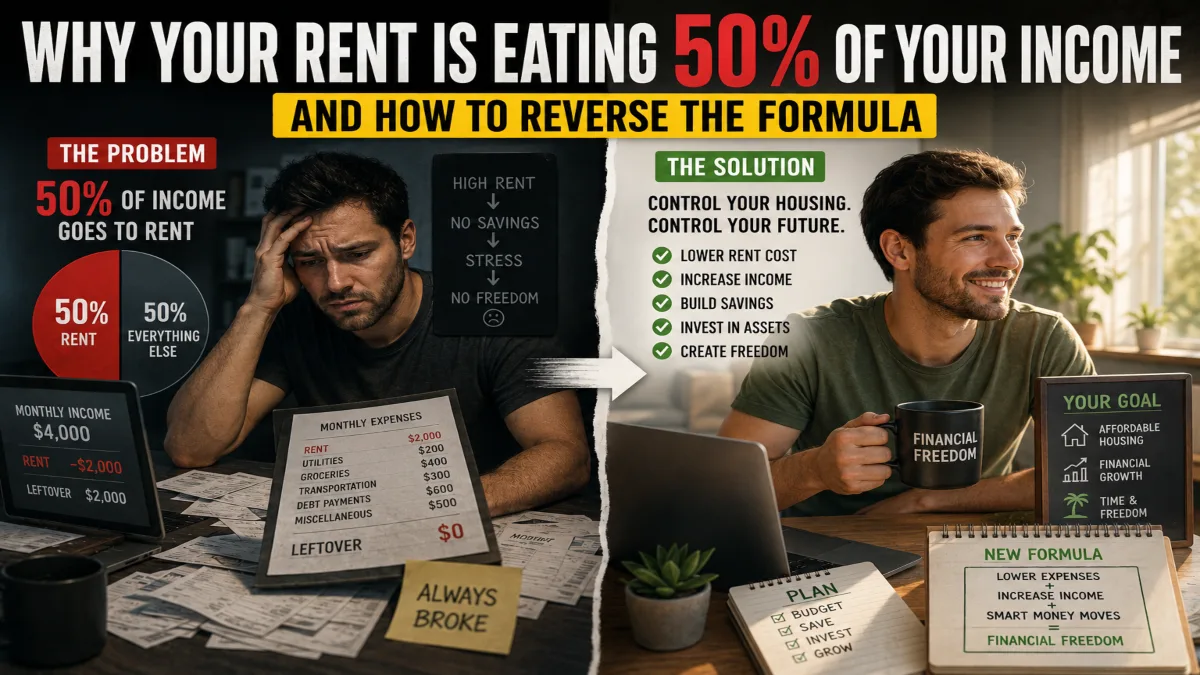
Why Your Rent Is Eating 50% of Your Income and How to Reverse the Formula has become one of the biggest financial concerns for Americans in 2026. Rising housing costs across major cities and suburban areas are leaving millions of workers struggling to cover basic expenses after paying monthly rent. What was once considered manageable housing spending has now become a serious threat to savings, debt repayment, and long-term financial security.
Housing Costs Are Rising Faster Than Salaries
Rent prices in many parts of the United States have continued increasing despite slower wage growth. Many workers are spending nearly half of their monthly income just to secure housing. This leaves less money available for groceries, transportation, healthcare, and emergency savings. Financial experts have long recommended keeping housing costs below 30% of income, but that target is becoming harder to achieve.
Lifestyle Inflation Is Making the Problem Worse
Many renters are also unknowingly increasing financial pressure through lifestyle inflation. Upgraded apartments, luxury amenities, and high-demand neighborhoods often come with premium pricing. While these features may improve comfort, they can quietly damage long-term financial stability.
- Higher monthly rent obligations
- Increased utility and maintenance costs
- Less room for savings and investing
This combination is pushing more households toward paycheck-to-paycheck living.
Remote Work Is Changing Housing Decisions
Remote work opportunities are encouraging some Americans to move away from expensive cities in search of lower living costs. Smaller towns and affordable suburban regions are becoming more attractive for workers who no longer need daily office commutes. This shift is helping some renters reduce monthly housing expenses significantly. Flexible work arrangements are now influencing financial planning decisions more than ever before.
Americans Are Building Extra Income Streams
To manage rising rent costs, many people are turning to side hustles and online income opportunities. Freelancing, remote consulting, content creation, and AI-assisted work are becoming common ways to supplement earnings. Multiple income streams are helping households recover financial breathing room. This trend reflects how modern workers are adapting to economic pressure.
Budgeting and Financial Awareness Are Improving
Financial education content on social media and digital platforms is helping Americans rethink spending habits. More renters are now tracking monthly expenses, negotiating bills, and prioritizing savings goals. Some are downsizing apartments or sharing housing costs to reduce pressure. These practical adjustments are helping people regain control over their finances.
Housing Cost Pressure in 2026
| Financial Category | Average Monthly Cost | Income Impact | Trend in 2026 |
|---|---|---|---|
| Urban Apartment Rent | $2,000–$3,500 | Very High | Rising |
| Suburban Rent | $1,400–$2,400 | High | Increasing |
| Utilities and Bills | $250–$600 | Moderate | Rising |
| Side Hustle Income | $500–$3,000 | Financial Relief | Rapid Growth |
| Shared Housing Savings | Up to $1,200 Saved | Strong Benefit | Growing Popularity |
Americans Are Rethinking Financial Priorities
Why Your Rent Is Eating 50% of Your Income and How to Reverse the Formula reflects the growing challenge of balancing housing costs with financial stability in 2026. As rent continues consuming larger portions of household income, Americans are exploring smarter budgeting, remote work flexibility, and additional income streams to recover control. The shift toward financial adaptability is becoming essential for surviving the modern cost-of-living crisis.