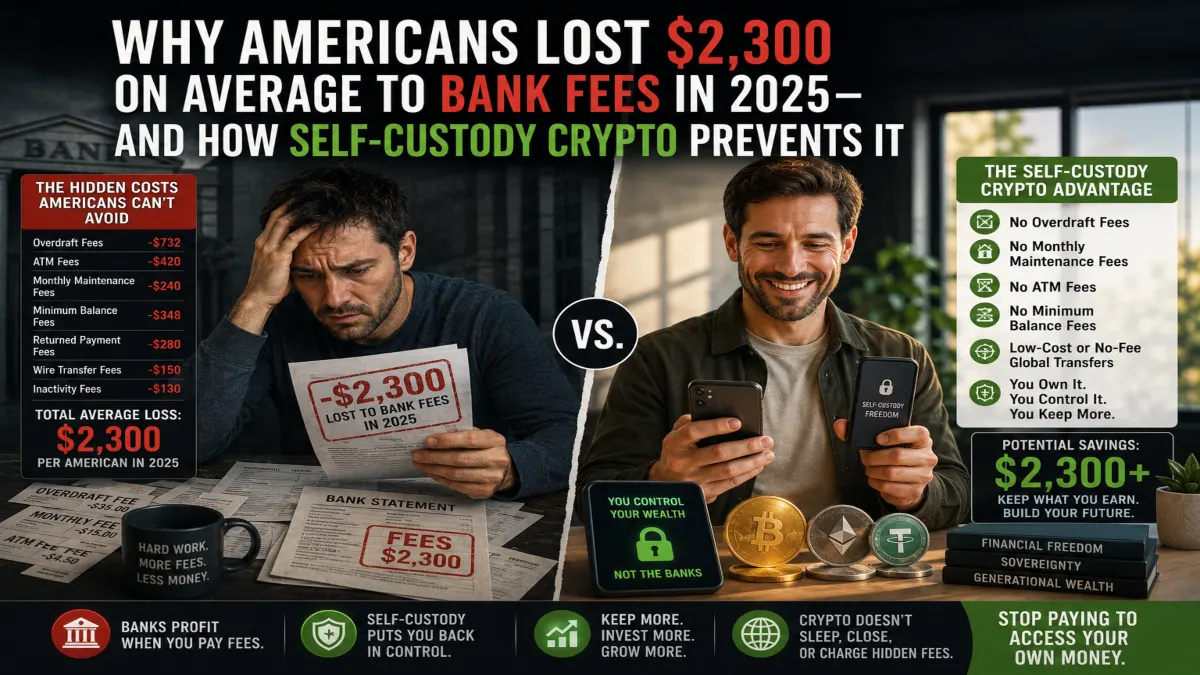
Why Americans Lost $2,300 on Average to Bank Fees in 2025—And How Self-Custody Crypto Prevents It is becoming a major topic in the financial world as consumers grow frustrated with hidden banking costs and account restrictions. From overdraft charges to wire transfer fees and monthly maintenance penalties, millions of Americans are realizing how much traditional banking quietly costs every year. In response, self-custody crypto wallets and decentralized finance tools are gaining popularity as alternatives that offer greater control and lower transaction costs.
Hidden Banking Fees Are Draining Household Budgets
Many Americans underestimate how much they spend on banking fees annually. Monthly account charges, ATM fees, overdraft penalties, and foreign transaction costs can quickly add up over time. For households already dealing with inflation and rising living expenses, these extra charges create additional financial pressure. Consumers are becoming more aware of how traditional banking systems profit from routine account activity.
Overdraft Fees Continue Hurting Consumers
Overdraft fees remain one of the most criticized banking charges in the United States. A single declined or delayed transaction can trigger multiple penalties within days. Americans living paycheck to paycheck are especially vulnerable to these fees. This ongoing issue is driving more consumers to search for alternatives that avoid account restrictions and penalty systems.
- Overdraft penalties
- ATM withdrawal charges
- Wire transfer and maintenance fees
These costs often go unnoticed until they become financially overwhelming.
Self-Custody Crypto Offers Direct Financial Control
Self-custody crypto wallets are becoming more popular because users maintain direct ownership of their funds without relying on banks. Unlike traditional accounts, there are usually no monthly maintenance charges or overdraft penalties. Transactions can also move faster, especially across borders or during weekends. This financial independence is attracting freelancers, remote workers, and younger consumers.
Stablecoins Are Fueling Everyday Crypto Usage
Stablecoins linked to the US dollar are making crypto more practical for daily financial use. Many users now store funds in stablecoins to avoid banking delays and unnecessary fees. Because stablecoins maintain relatively stable value, they are becoming useful for payments, savings, and peer-to-peer transfers. Mobile wallet apps are also simplifying access for mainstream users.
Younger Americans Are Driving Financial Change
Gen Z and millennials are leading adoption of digital financial systems and self-custody tools. Many younger consumers prefer mobile-first financial solutions that offer flexibility and transparency. Social media and online finance communities are helping educate users about alternatives to traditional banking. This shift is reshaping how Americans think about money management in 2026.
Traditional Banking vs Self-Custody Crypto
| Financial Feature | Traditional Banks | Self-Custody Crypto | Consumer Trend |
|---|---|---|---|
| Monthly Fees | Common | Rare | Crypto Growing |
| Overdraft Penalties | High | None | Crypto Preferred |
| Transaction Speed | Moderate | Fast | Increasing Adoption |
| Weekend Access | Limited | 24/7 Access | Strong Advantage |
| User Control | Bank Controlled | User Controlled | Rising Demand |
Financial Independence Is Becoming a Priority
Why Americans Lost $2,300 on Average to Bank Fees in 2025—And How Self-Custody Crypto Prevents It highlights how consumers are increasingly questioning traditional banking systems. Rising fees and limited account flexibility are pushing more Americans toward digital financial tools that provide faster access and greater personal control. As self-custody technology becomes easier to use, crypto-based money management may continue expanding across everyday financial life.