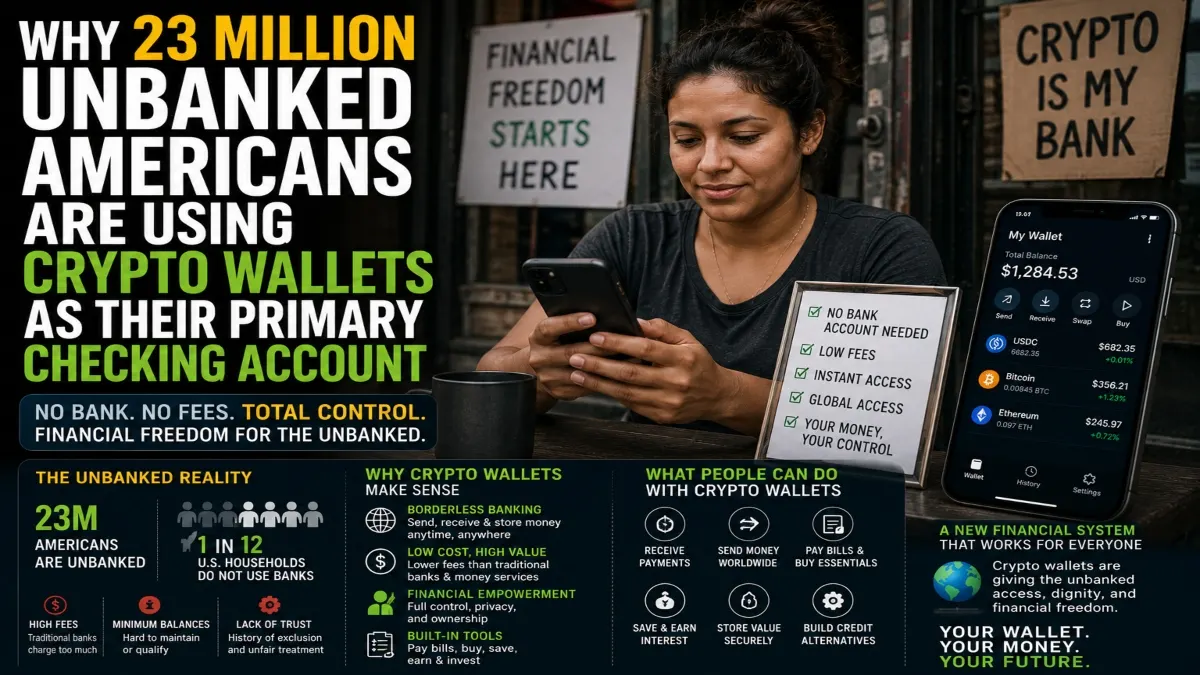
Why 23 Million Unbanked Americans Are Using Crypto Wallets as Their Primary Checking Account is becoming one of the most important financial shifts in the United States in 2026. Millions of Americans still lack access to traditional banking services due to high fees, credit issues, account restrictions, or limited financial infrastructure. As digital finance tools become easier to use, crypto wallets are emerging as an alternative way to store money, send payments, and manage everyday transactions without relying on traditional banks.
Traditional Banking Barriers Still Affect Millions
Many Americans remain outside the traditional banking system because of overdraft penalties, minimum balance requirements, and account verification issues. For lower-income households, unexpected fees can quickly create financial stress. Some consumers also struggle with frozen accounts or delayed payment processing. These barriers are encouraging people to explore alternative financial systems that provide faster and more direct access to money.
Crypto Wallets Offer Greater Accessibility
Crypto wallets are gaining popularity because they can often be created within minutes using only a smartphone and internet connection. Unlike traditional checking accounts, many wallets do not require credit checks or large opening balances. Users can receive, store, and send digital funds instantly from almost anywhere.
- Fast peer-to-peer payments
- No traditional banking requirements
- 24/7 access to digital funds
This accessibility is especially important for gig workers and underserved communities.
Stablecoins Are Driving Everyday Usage
Stablecoins linked to the US dollar are becoming central to daily crypto finance activity. Many users prefer stablecoins because they avoid the extreme price swings associated with other cryptocurrencies. These digital assets are increasingly used for savings, online purchases, freelance payments, and money transfers. Faster transaction speeds are making them practical for routine financial use.
Gig Workers and Freelancers Prefer Flexible Payments
Freelancers, remote workers, and gig economy participants are among the biggest adopters of crypto wallets. Many independent workers receive payments through digital platforms that support stablecoin transfers. Instant access to earnings helps workers avoid delays caused by traditional bank processing systems. This flexibility is reshaping expectations around modern payment methods.
Younger Americans Are Embracing Digital Finance
Gen Z and millennials are leading adoption of crypto-based financial tools. Mobile-first banking habits and growing trust in digital technology are accelerating this shift. Younger users often value speed, flexibility, and direct financial control more than traditional banking relationships. Social media and online finance communities are also helping educate new users about self-custody and decentralized payments.
Banking Access vs Crypto Wallet Usage in 2026
| Financial Feature | Traditional Checking Accounts | Crypto Wallets | Consumer Trend |
|---|---|---|---|
| Monthly Fees | Common | Rare | Crypto Growing |
| Account Approval | Required | Easier Access | Strong Interest |
| Payment Speed | Moderate | Fast | Increasing Adoption |
| Weekend Transfers | Limited | 24/7 Availability | Major Advantage |
| User Financial Control | Bank Managed | Self-Controlled | Rising Demand |
Digital Wallets Are Reshaping Financial Access
Why 23 Million Unbanked Americans Are Using Crypto Wallets as Their Primary Checking Account highlights how financial technology is changing access to money management in 2026. More Americans are seeking systems that reduce fees, improve accessibility, and provide faster control over personal funds. As crypto wallets and stablecoins become more mainstream, digital finance may continue evolving into a practical alternative for millions excluded from traditional banking systems.