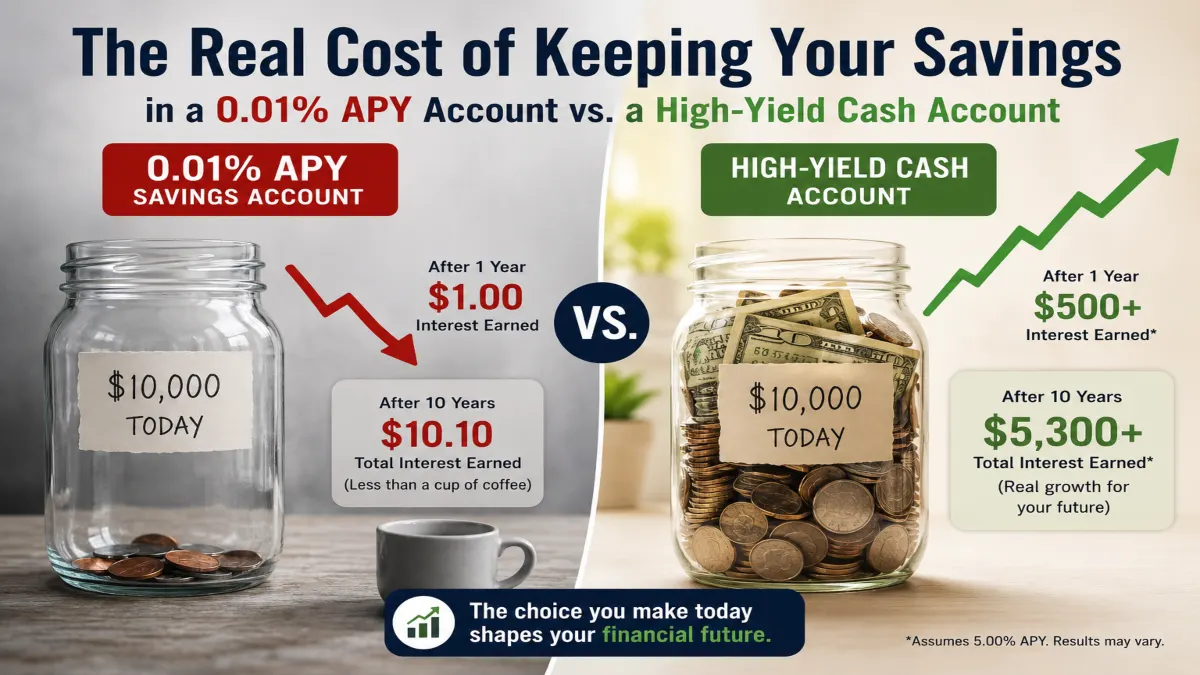
The Real Cost of Keeping Your Savings in a 0.01% APY Account vs. a High-Yield Cash Account is becoming a major financial concern for Americans in 2026. While millions of people still keep money in traditional savings accounts offering almost no returns, high-yield cash accounts are helping savers earn significantly more without changing spending habits. As inflation continues impacting household finances, the difference between these accounts is becoming impossible to ignore.
Traditional Savings Accounts Are Losing Value
Many large banks in the United States still offer savings accounts with APYs as low as 0.01%. Although these accounts provide security and easy access to funds, they generate almost no meaningful returns. Inflation continues reducing purchasing power every year, meaning money sitting idle effectively loses value over time. Americans are now paying closer attention to where they store their savings.
High-Yield Cash Accounts Are Growing Fast
High-yield cash accounts have become increasingly popular because they offer far better returns compared to standard bank savings accounts. Online banks and digital financial platforms are competing aggressively by offering attractive APY rates. These accounts often provide similar accessibility while helping savers grow their money faster. Many consumers are now switching after realizing how much income they were missing.
- Higher annual interest earnings
- Better inflation protection
- Easy online account management
This shift reflects changing financial awareness among everyday savers.
Inflation Makes Low APY Accounts More Expensive
Inflation remains one of the biggest reasons low-interest savings accounts are losing appeal. Even moderate inflation can quietly reduce the real value of stored cash. If a savings account earns only 0.01% while inflation stays much higher, purchasing power declines year after year. High-yield accounts help reduce some of that financial erosion.
Younger Americans Are Becoming More Financially Aware
Millennials and Gen Z consumers are increasingly using financial apps and online banking tools to maximize savings growth. Social media and personal finance content creators have also helped educate users about APY differences. Many younger savers now actively compare account rates before opening accounts. This digital-first approach is reshaping how Americans manage emergency funds and long-term savings.
Online Banking Is Driving the Change
Digital banking platforms have simplified access to better savings products. Opening a high-yield account now takes only minutes through mobile apps or websites. Many platforms also offer automated savings tools, budgeting insights, and instant transfers. Convenience combined with stronger returns is accelerating adoption across the country.
Savings Growth Comparison in 2026
| Account Type | Average APY | Estimated Earnings on $10,000 | Inflation Protection |
|---|---|---|---|
| Traditional Savings | 0.01% | Around $1 yearly | Very Low |
| Regional Bank Savings | 0.10% | Around $10 yearly | Low |
| Online High-Yield Account | 3.50% | Around $350 yearly | Moderate |
| Premium Cash Account | 4.00% | Around $400 yearly | Strong |
| Promotional High-Yield Account | 4.50% | Around $450 yearly | Better Protection |
Americans Are Rethinking Where They Keep Cash
The Real Cost of Keeping Your Savings in a 0.01% APY Account vs. a High-Yield Cash Account shows how small interest differences can create major long-term financial impact. More Americans are realizing that traditional savings accounts may no longer be enough during periods of rising inflation and economic uncertainty. As high-yield banking options continue expanding, smarter cash management is becoming an important part of financial survival in 2026.